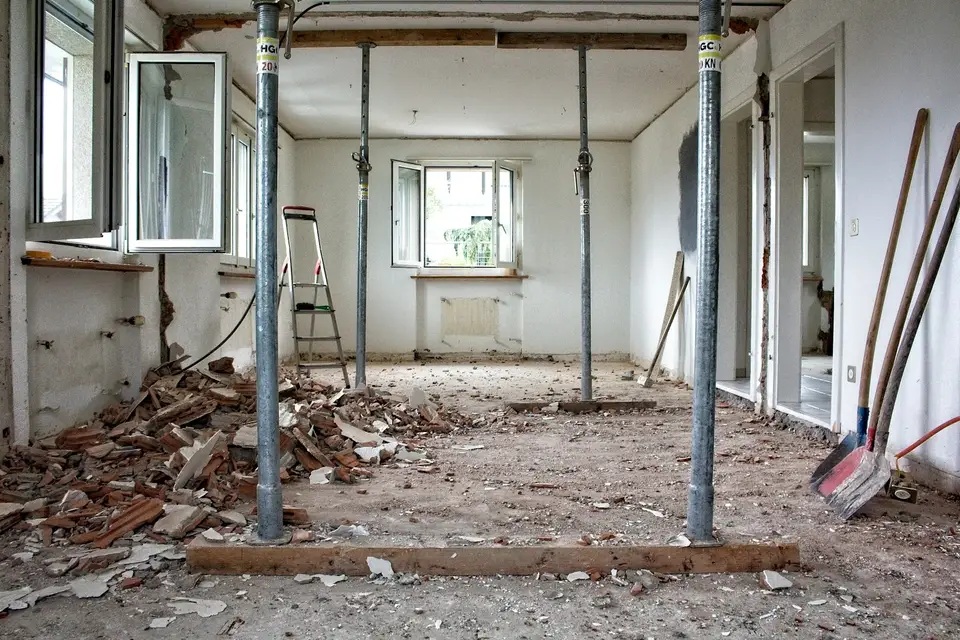
Interior & Selective Demolition in Natick: what's different here
Before any tear-out in Natick, we check the age of the house and the Natick building department's permit rules, then plan where the dumpster goes, on the driveway or with a street permit, so it doesn't block neighbors in Natick Center and South Natick. Basements near Lake Cochituate are often damp, so we expect, photograph and report any hidden rot or mold behind old paneling.
About 61% of homes were built before 1980 and 22% before 1940; median year built 1968 (ACS 2020-2024 5-year). Homes built around 1968 often have 9-inch vinyl tile, black mastic, popcorn ceilings or textured joint compound that may contain asbestos. We have suspect materials sampled by a licensed inspector before anything is torn out.
Much of Natick's housing comes from late-1940s and 1950s tract neighborhoods, such as Sherwood's 1948 colonials, Wethersfield's slab-built Campanelli ranches and the Cape-style streets off South Oak Street.
Walnut Hill north of downtown is known for Victorian-era houses along Walnut, Highland and Bacon Streets, and South Natick on the Charles River has some of the town's oldest homes.
Signs you need this service
- A kitchen or bathroom remodel that starts with a tear-out
- Wet, burned or moldy drywall, insulation or flooring that has to come out
- A wall you want opened between two rooms
- A basement with old paneling, carpet or a dropped ceiling
- Layers of old flooring, tile or plaster to remove down to the subfloor
- A commercial unit being taken back to shell for a new tenant
Do I need an asbestos test before demolition in Massachusetts?
Usually, yes. MassDEP requires building owners to have a DLS-licensed asbestos inspector survey and sample suspect materials before renovation or demolition. The only exemption is an owner of an owner-occupied single-family home who personally removes non-friable material. If asbestos is found, a licensed abatement contractor removes it before demolition starts.
Asbestos was common in homes built through the 1980s: vinyl floor tile and its black mastic, popcorn and textured ceilings, some joint compound and plaster, pipe and boiler wrap, and exterior cement shingles. You can't tell by looking, so samples go to a lab.
When removal is needed, the licensed abatement contractor files a notification with MassDEP and the Department of Labor Standards 10 working days before the work (form AQ 04 / ANF-001). The $100 fee is waived for owner-occupied homes with four or fewer units. See the MassDEP asbestos FAQ. We build that lead time into the schedule instead of discovering it mid-job. If you're removing a textured ceiling, read our popcorn ceiling removal page first.
What changes when you demolish inside a house built before 1978?
Lead paint. In Massachusetts, paid renovation in pre-1978 housing that disturbs more than 6 sq ft of painted surface per room indoors, or 20 sq ft outdoors, falls under Department of Labor Standards lead-safe renovation rules, and demolition is covered at any size. The work must be done by a DLS-licensed lead-safe renovation contractor.
In practice that means containment, no dry sanding or open-flame removal, daily HEPA cleanup and a final cleaning check. You should also receive EPA's Renovate Right pamphlet before work starts. Before we price a demolition in an older home, we confirm how the lead rules apply and who on the job holds the required license.
This is separate from the Massachusetts Lead Law, which requires deleading by a licensed deleader when a child under 6 lives in a pre-1978 home.
How do I know if a wall is load-bearing before demolition?
Walls running perpendicular to the floor or ceiling joists above, walls near the middle of the house and walls stacked over a beam or another wall are often load-bearing. The only reliable answer comes from opening the ceiling and tracing the load. Removing a bearing wall needs a permit, a properly sized beam and licensed supervision.
On older Massachusetts houses, especially balloon-framed homes, "partition" walls sometimes carry more than they look like they do. We open a small inspection hole, trace joists and posts down to the foundation, and if the wall is structural we bring in an engineer to size the beam and posts. Our general contracting team handles the permit, temporary shoring and the rebuild.
What happens to the debris from a demolition job?
It goes into a dumpster sized to the job (10 to 20 cubic yards covers most kitchens, baths and basements) and then to a licensed transfer station. Massachusetts bans asphalt, brick, concrete, metal, wood and clean gypsum wallboard from disposal, so those materials have to be separated or sent to a processing facility that recycles them.
The waste ban (310 CMR 19.017) applies to anyone who disposes of, or contracts to dispose of, those materials, which is why we sort scrap metal and clean drywall instead of mixing everything. Driveway placement is simplest; a street dumpster may need a permit from the town. Heavy debris such as tile and mortar beds, plaster or concrete fills a dumpster's weight limit long before its volume, so we plan for it.
How do you keep dust out of the rest of the house during demolition?
By containing the work area: plastic zip walls from floor to ceiling, a zippered door, a HEPA air scrubber exhausting to the outside to keep the room under negative pressure, sealed HVAC returns and floor protection along the path out. We HEPA-vacuum at the end of each day instead of dry sweeping.
- Furnace or air handler off, or filters changed after the dusty phase
- Doors to the rest of the house kept closed and taped where needed
- Walk-off mats at the containment door
- Final post-construction cleaning once the rebuild is done
How the job works, step by step
- Walkthrough and hazard checkWe note the age of the house and every suspect material: 9-inch floor tile, black mastic, popcorn ceilings, old plaster, pipe insulation and pre-1978 paint. Massachusetts requires a licensed asbestos inspector to survey before renovation or demolition, and we schedule that survey before any tear-out.
- Utilities, structure and permitWater, gas and power to the area are shut off and capped by licensed trades. Walls that may carry load are checked from above and below before anyone cuts, and we pull the demolition or building permit where the town requires it.
- Containment and protectionZip walls and plastic sheeting close off the room, a HEPA air scrubber keeps the area under negative pressure, HVAC returns get sealed, and floor protection board runs from the work area to the door.
- Selective tear-outWe take materials out roughly in reverse order of installation (trim, fixtures, cabinets, then drywall or plaster) so cabinets, doors or flooring you want to keep come out intact. Hidden rot, mold or old wiring gets photographed and reported the same day.
- Debris, dumpster and recyclingWe size the dumpster to the job, place it on the driveway or with a street permit, and keep metal, clean wood and clean drywall out of the trash stream, as the MassDEP waste ban requires.
- Clean and hand-offThe space is HEPA-vacuumed and broom-clean, with photos of the open framing so the designer, engineer or inspector can plan the next stage.
What it costs in Massachusetts
National typical ranges reported by Fixr (updated January 2025); Massachusetts labor and disposal fees usually run above the national average. Asbestos abatement, if needed, is priced separately by a licensed abatement contractor. Your final price comes after a free on-site estimate.
| Job | Typical MA range |
|---|---|
| Interior demolition, typical project | $1,000 - $5,000 (average about $2,500) |
| Interior demolition per sq ft | $2 - $10 |
| Kitchen tear-out | $500 - $3,000 |
| Bathroom tear-out | $550 - $1,500 |
| Basement demolition | $5,000 - $25,000 |
| Dumpster rental | $200 - $550 per week |
Source: Fixr: Interior demolition cost