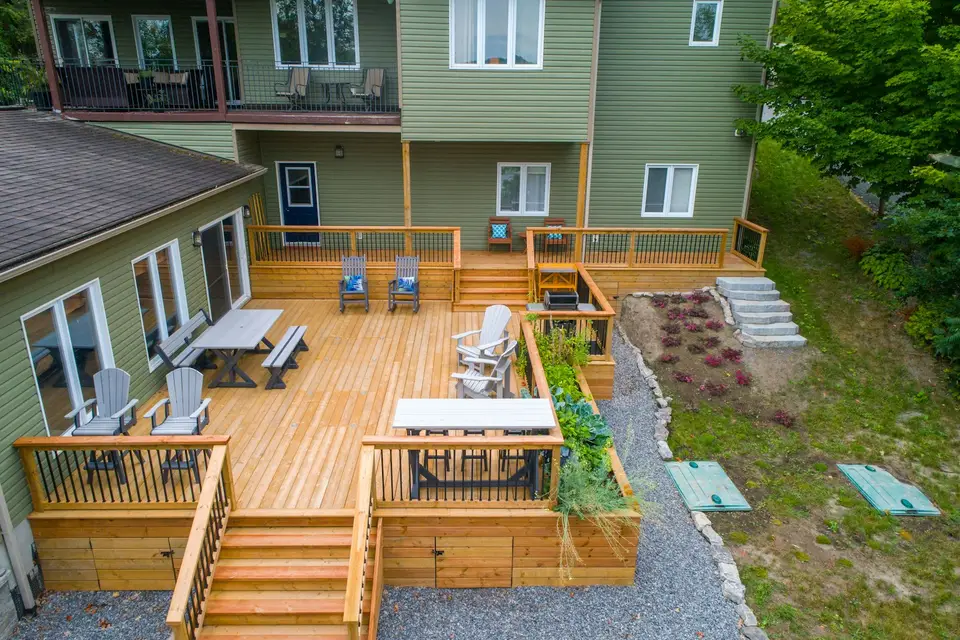
Exterior Carpentry & Rot Repair in Marlborough: what's different here
Freeze-thaw winters and humid summers in Marlborough are hard on exterior wood, especially on shaded lots and homes near Assabet River. From Downtown Village and French Hill to the rest of Middlesex County, we see the same weak spots: sills, corner boards, fascia behind gutters and deck ledgers.
About 57% of homes were built before 1980 and 21% before 1940; median year built 1974 (ACS 2020-2024 5-year). With a median build year of 1974, many Marlborough homes have original wood trim and decks from the 1970s and 80s that are reaching the end of their life. Ledgers built before modern flashing practice deserve a close look.
By 1890 Marlborough was a major shoe-manufacturing center, and multi-unit worker housing blocks built by shoe manufacturers still stand near former factory sites such as Devens and Elm Streets.
The bell from John Brown's fort at Harpers Ferry, brought home by a Marlborough Civil War company, hangs in a tower at Route 85 and Main Street.
Signs you need this service
- Soft, spongy or crumbling wood at sills, corner boards or door casings
- Fascia boards stained, sagging or rotted behind the gutters
- Holes or gaps in soffits where birds, bees or squirrels get in
- Deck boards that flex, split or stay wet and green
- Wobbly deck or porch railings and loose stairs
- Peeling paint that keeps coming back on the same boards
- Porch floor or column bases that are rotting at the bottom
How do you fix rotted trim, sills or window frames?
Rotted trim is cut back to solid wood and replaced with a new piece primed on all sides, or with PVC. Small soft spots on an otherwise sound sill can be hardened with epoxy consolidant and filled. Then the joint is flashed or caulked and painted, and the water source is fixed so the rot does not return.
In Massachusetts, rot starts where water sits and freezes: window sills, the bottoms of door casings and corner boards, fascia behind gutters, the lowest courses of siding and porch column bases. Every freeze-thaw cycle widens open joints and lets more water in, so a small soft spot turns into a replacement job within a few winters.
We repair the wood and paint it in the same visit. If the whole house needs paint, see exterior painting.
Is PVC or wood trim better in New England?
Cellular PVC trim does not rot, holds paint well and is the safer choice where trim meets roofs, decks, soil or gutters. It expands and contracts with temperature, so it needs glued joints and proper fastening. Wood trim matches historic profiles and costs less but must be primed on all sides and kept painted.
PVC trim makers spell out how to handle movement. AZEK's install guide, for example, calls for an allowance of about 1/8 inch per 18 feet of trim when properly fastened, glued joints, stainless or hot-dipped galvanized fasteners, and no staples or brads. Very dark paint colors on PVC need a paint rated for vinyl because dark surfaces heat up and move more.
Wood still makes sense on many older homes, especially for complex moldings. We use rot-resistant species or primed stock, back-prime every piece and seal every end cut, because end grain wicks water like a straw.
- PVC: sills, door bottoms, corner boards, fascia and anything near the roof or ground
- Wood: historic profiles, detailed cornices and painted trim away from water
- Both: flashing, drainage gaps and good paint matter more than the material
Do I need a permit to build or repair a deck in Massachusetts?
Usually yes. The state building code exempts only small freestanding decks of 200 square feet or less, no more than 30 inches above grade, not attached to the house and not serving a required exit door. Attached decks, new decks and structural repairs need a building permit and supervision by a licensed Construction Supervisor (CSL).
The state says larger projects such as decks and additions need a CSL holder, while ordinary repairs typically need only HIC registration. See Mass.gov on CSL requirements. Your town may also require a zoning review for setbacks.
Have the contractor pull the permit. If you pull it yourself at a contractor's request, you lose eligibility for the state HIC Guaranty Fund, which can pay up to $25,000 of an unpaid judgment against a registered contractor.
Can a rotted deck be repaired, or does it need replacing?
If the posts, beams, joists and ledger are sound, a deck can usually be repaired by replacing decking, stair treads and railings. If the ledger connection is rotted, joists are soft, or footings have heaved, the structure needs rebuilding. We probe the framing and check the ledger before recommending either one.
The ledger, where the deck attaches to the house, is the critical connection. Current practice is flashing above and behind it and bolting or lag-screwing it to the house framing, not nailing. Posts sit on footings below the frost depth your building department requires, and pressure-treated lumber needs hot-dipped galvanized or stainless fasteners and hangers.
Why do fascia and soffits rot, and how are they repaired?
Fascia rots when gutters overflow, drip edge is missing or ice dams push water behind the gutter. Soffits fail from the same water and from animals chewing in. We replace damaged boards, often with PVC fascia and vented soffit, fix rafter tails if needed, and rehang the gutters.
Soffit vents bring fresh air into the attic, which helps keep the roof deck cold and reduces ice dams. We keep or add venting when we replace soffits. If ice dams caused interior damage, our storm and ice dam restoration team handles the inside too, and clean gutters keep new fascia dry.
How the job works, step by step
- Inspect and probeWe probe trim, sills, fascia, deck framing and porch parts with an awl and moisture meter to find where rot starts and stops. You get photos and a written scope.
- Find the water sourceRot is a symptom. We look for the cause, such as overflowing gutters, missing drip edge or flashing, bad caulk, or wood touching soil, and fix it as part of the repair.
- Cut back to sound woodDamaged sections are removed to solid material. Small, isolated soft spots can be consolidated and filled with epoxy; anything larger is replaced.
- Flash, prime and installNew wood is primed on all sides and end cuts sealed before it goes up, or we use PVC trim at high-risk spots. Flashing goes in where water was getting behind the trim, and fasteners are stainless or hot-dipped galvanized.
- Caulk and paintJoints are caulked and the repair is painted to match by our own painters, so there is no bare wood waiting for another contractor.
- Permits for structural workFor deck and porch framing, stairs and structural repairs, we pull the building permit as the contractor and schedule the inspections.
What it costs in Massachusetts
These are national ranges reported by Fixr (deck repair and roof eaves guides); New England labor and the extent of hidden rot can push jobs higher. Your final price comes after a free on-site estimate.
| Job | Typical MA range |
|---|---|
| Typical deck repair project | $500 – $3,000 |
| Deck board repair | $10 – $35 per sq ft |
| Deck joist repair | $100 – $300 per joist |
| Deck railing repair | $25 – $100 per linear ft |
| Deck stair repair | $15 – $50 per step |
| Fascia repair | $6 – $16 per linear ft |
| Soffit repair | $6 – $20 per linear ft |
Source: Fixr, deck repair cost guide