Finish Carpentry in Medway: what's different here
Homes in Medway range from older plaster houses to newer drywall construction, and each needs a different approach to trim. Whether you are in Medway Village and West Medway or near Charles River, we measure on site and fit every piece to your actual walls and floors.
About 54% of homes were built before 1980 and 19% before 1940; median year built 1976 (ACS 2020-2024 5-year). With a median build year of 1976, Medway homes often have narrow "clamshell" casing and baseboard. Upgrading to wider, profiled trim and new solid doors changes the whole feel of a room.
The Medway Village Historic District, listed on the National Register in 2008, is a 19th-century textile-mill village on the Charles River with more than 240 historic structures.
West Medway's Rabbit Hill Historic District, listed in 1988, is made up mostly of Federal and Greek Revival homes around the former Second Congregational Church.
Signs you need this service
- Gaps, open miters or split trim at corners and joints
- Doors that rub, stick or will not latch
- Baseboard damaged by water, pets or old flooring changes
- New floors installed and the trim needs to come back
- Plain rooms you want to dress up with crown or wainscoting
- Loose balusters, worn treads or a wobbly handrail
- Wasted wall space that could be a built-in or window seat
How much does it cost to install baseboard and crown molding?
HomeAdvisor reports baseboard installation at about $5.70 to $9.00 per linear foot including materials and labor, with most projects between $800 and $2,250. Crown molding runs roughly $4 to $23 per linear foot installed. Profile size, wood species, ceiling height and wall condition move the price.
Older Massachusetts homes with plaster walls that bow, out-of-square corners and high ceilings take more scribing and fitting time than a new house with straight drywall. We price by the linear foot and list painting separately so you can compare.
If your floors are being replaced, plan trim at the same time. After new hardwood flooring goes down, baseboard and shoe molding usually need to be reset or replaced.
Do I need a permit for trim, doors or built-ins in Massachusetts?
Usually not. The Massachusetts building code (780 CMR 105.2) exempts painting, cabinets, counter tops and similar finish work from a building permit, and replacing interior trim or doors generally falls in that group. Moving walls, changing stairs or guards, or touching structure, egress or fire-rated assemblies can require one.
For any home improvement job over $1,000 on an owner-occupied 1- to 4-unit home, the contractor must be registered as a Home Improvement Contractor (HIC), use a written contract and keep the deposit at or below one-third of the price. You can check a registration on the state HIC resources page.
What are the code rules for stairs and railings in Massachusetts?
Massachusetts amends the residential code to allow a maximum riser height of 8¼ inches and a minimum tread depth of 9 inches (780 CMR R311.7). Open sides of stairs and landings more than 30 inches above the floor need guards, and stairs need a graspable handrail. Rebuilding stairs typically requires a permit.
Replacing worn treads, balusters or a handrail with matching parts is often treated as repair, while changing the stair layout is not. We confirm with your local building department before we start. Stair code text: 780 CMR R311.7.
- Treads: replace cupped or cracked treads; match oak or pine species
- Balusters: tighten or replace loose spindles
- Handrails: re-anchor wobbly rails into framing
- Newel posts: re-secure at the base so the rail stays rigid
- Risers and skirt boards: replace and repaint
Should I choose MDF, pine or hardwood trim?
For painted trim in dry rooms, MDF and finger-jointed pine are smooth and affordable. Poplar is a solid hardwood that paints well and dents less. For stained trim, choose oak, maple or cherry. In bathrooms, basements and mudrooms, avoid MDF, which swells when wet, and use solid wood or PVC instead.
Matching an existing profile in an older home is often easier with solid wood, since many historic profiles are no longer stocked. We can combine stock moldings to reproduce a period look for a room that lost its original trim.
How do you install trim in an older home with uneven walls?
We scribe trim to follow wavy plaster, shim behind casing so it sits flat, and cope inside corners so joints stay closed as the house moves. Out-of-level floors are handled by scribing baseboard to the floor and adding shoe molding, rather than leaving gaps for caulk to fill.
In homes built before 1978, painted trim often carries lead-based paint. Under Massachusetts rules, paid work that disturbs more than 6 square feet of painted surface per room in a pre-1978 home must be done by a DLS-licensed Lead-Safe Renovation contractor, and window replacement is covered at any size. We flag this at the estimate. See Mass.gov lead-safe renovation.
Old plaster around door and window openings may also need repair before new casing goes on. We handle that with our plaster repair crew.
How the job works, step by step
- Measure and designWe measure each wall, check corners for square and walls for plumb, and help you choose profiles that suit the house. You get a written estimate listing materials, linear footage and finishes.
- Order and acclimate materialsTrim and door stock is delivered and left to sit in the heated house so it adjusts to indoor humidity before it is cut. This reduces gaps that open up after the first winter.
- Remove and prepareOld trim is removed carefully. In pre-1978 homes we follow lead-safe work practices when painted trim comes off. Walls are checked and shimmed so new trim sits flat.
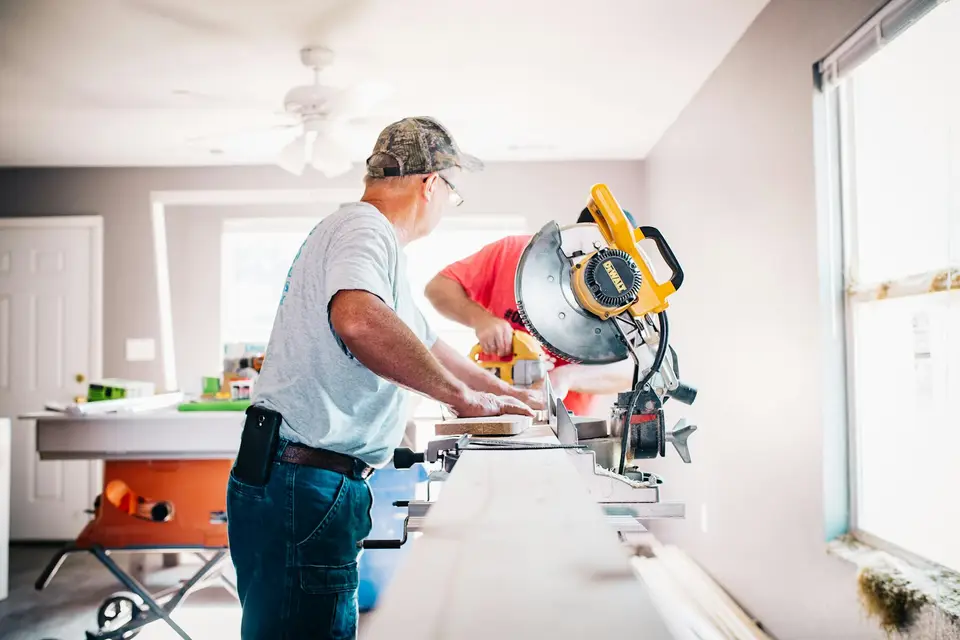
- Cut, fit and fastenInside corners on baseboard and crown are coped, not just mitered, so they stay tight as the house moves. Long runs get glued scarf joints, and everything is nailed into framing.
- Fill, caulk and sandNail holes are filled, seams and wall gaps caulked with paintable caulk, and joints sanded smooth so the finish shows no lines.
- Prime and paintOur painters prime and apply enamel to the new trim, or stain and clear-coat stain-grade wood. One crew, one schedule, one guarantee.
What it costs in Massachusetts
These are national ranges reported by HomeAdvisor; Massachusetts labor typically lands in the middle to upper part of each range. Your final price comes after a free on-site estimate.
| Job | Typical MA range |
|---|---|
| Baseboard installed, materials and labor | $5.70 – $9.00 per linear ft |
| Shoe molding or quarter round installed | $5.50 – $9.00 per linear ft |
| Typical baseboard project | $800 – $2,250 |
| New baseboard when replacing old | $6 – $9 per linear ft |
| Crown molding installed | $4 – $23 per linear ft |
Source: HomeAdvisor, cost to install baseboard