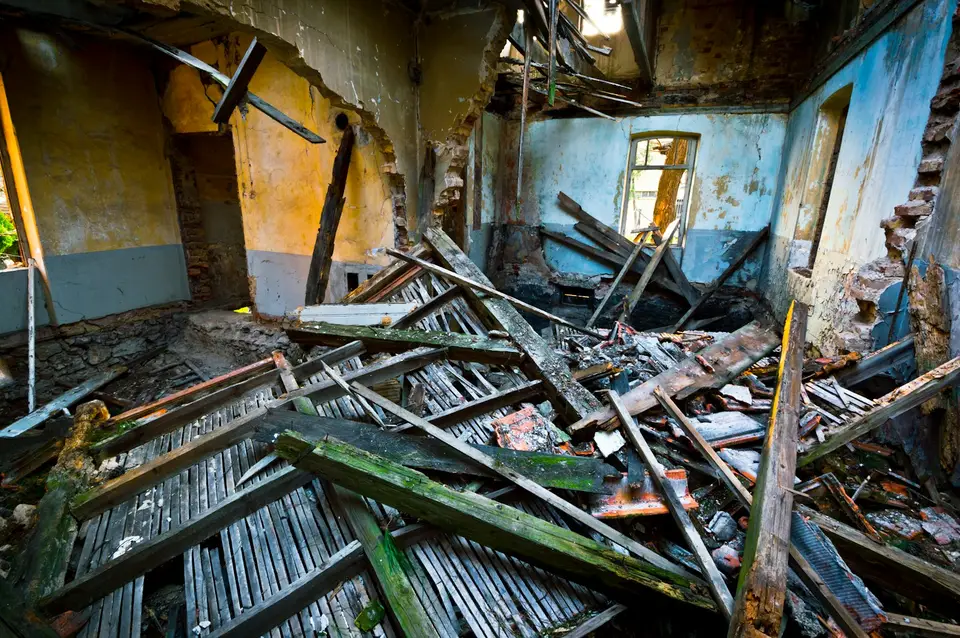
Fire & Soot Damage Restoration in Boxborough: what's different here
Plenty of homes in Boxborough still heat with oil or have older wiring, so many of our Boxborough smoke calls are furnace puffbacks and small kitchen fires, not just large structure fires. In neighborhoods like Boxborough Old Town Center (Hill Road), we clean, seal and repaint with the same crew so the smell and the stains don't come back.
About 46% of homes were built before 1980 and 1% before 1940; median year built 1989 (ACS 2020-2024 5-year). Boxborough homes from the 1960s through the 80s (median year built 1989) often have popcorn ceilings and textured walls that trap soot and can't be cleaned well. Those textures can contain asbestos, so we arrange testing before removal, then skim, prime and repaint.
Boxborough was formed in 1783 from parts of Harvard, Littleton and Stow and stayed largely agricultural through the 19th century.
The Boxborough Old Town Center, a National Register district listed in 2006, runs along Hill Road with 52 contributing properties dating from the 1770s to the early 1900s.
Signs you need this service
- A black or gray film on walls, ceilings and window sills
- Dark streaks around outlets, door edges and ceiling corners, where soot followed the airflow
- A smoke smell that comes back on warm or humid days
- Yellow-brown discoloration on paint and cabinets after a kitchen fire
- Oily black soot throughout the house after an oil-burner puffback
- Wet ceilings, insulation and floors from firefighting water
- Warped trim, melted vinyl or blistered paint near the fire
What should I do in the first 60 minutes after a house fire?
Stay out until the fire department says the building is safe to enter. Then call your insurer, secure the house against weather and break-ins, and photograph every room before touching anything. Keep the HVAC off, don't wipe soot with water, and throw away food exposed to heat, smoke or soot.
Soot is acidic and keeps working after the flames are out: it etches glass and metal, yellows paint and sets into fabric. The U.S. Fire Administration warns that residual soot and dirty water can be hazardous, so wear gloves and an N95 mask if you must go in for essentials.
- Get the fire department's incident or report number; your insurer will ask for it.
- Don't turn utilities back on yourself. The fire department or the utility decides when power, gas and oil heat are safe.
- Keep the furnace, central air and ceiling fans off. They pull soot through every room and into the ductwork.
- Don't wipe walls, ceilings or upholstery. Water and household cleaners smear soot and set it into paint and fabric.
- Take medication, documents and valuables if it's safe, and write down what you removed.
- Call or text (774) 285-1518 for emergency board-up, roof tarping and water extraction.
What are the different types of smoke damage?
Restorers deal with four main residues. Dry smoke comes from fast, hot fires in wood and paper. Wet smoke comes from smoldering plastics and is sticky and smeary. Protein residue from burned food is nearly invisible but smells strong. Fuel-oil soot comes from a furnace puffback. Each one needs a different cleaning method.
The first ANSI/IICRC S700 standard, published in 2025, requires the restorer to assess where residue is, how intense it is and where it stops, and to document a Restoration Work Plan. In practice, that means test-cleaning before cleaning. Dry soot comes off with a HEPA vacuum and a dry chemical sponge; wiping it wet first just smears it deeper. Wet smoke, protein and oil residue need degreasing cleaners.
Puffbacks are a New England specialty. Many Massachusetts homes still heat with oil, and a misfiring burner can blow oily soot through every room and duct in minutes. It looks like a fire happened when none did. The burner has to be serviced by your heating company before it runs again, and the ductwork is evaluated before the system is restarted.
- Dry smoke: powdery, easy to smear, travels far through small gaps.
- Wet smoke: sticky, dark and smelly; common when furniture, foam and plastics smolder.
- Protein: a yellow-brown film from burned food that discolors paint and holds strong odor.
- Fuel-oil soot: black, oily, everywhere; the signature of an oil-burner puffback.
How do you get the smoke smell out of a house?
By removing the source instead of masking it. Smoke odor lives in soot and in porous materials, so we clean every affected surface, remove charred materials and insulation, replace HVAC filters, then neutralize what remains with air scrubbers and hydroxyl or thermal fogging, and seal surfaces with a stain-blocking primer before painting.
Air fresheners and quick ozone treatments don't last. If soot is still inside wall cavities, closets or insulation, the smell comes back on the first humid July day. Smoke also travels through outlets, recessed lights and attic bypasses, so we check cavities and insulation in rooms that look clean.
When we use ozone it is only in an unoccupied house, because ozone is a lung irritant. Hydroxyl generators can run with people nearby, which is useful when you are still living in part of the home.
Can smoke-damaged walls be painted over?
Only after they are cleaned and sealed. Paint applied over soot and smoke film won't bond, and stains and odor bleed back through. We clean the surface, prime with a shellac- or oil-based stain-blocking primer made for smoke, and only then apply finish coats. Charred or heavily smoked drywall is replaced, not painted.
This is where a one-company job pays off. Our interior painting crew is the same crew that cleaned the walls, so nobody skips the sealing step to save a day. Where the board is charred or the paper face is burned, we cut it out and do a proper drywall repair with tape and three coats before priming. Smoke-stained trim, doors and built-ins are cleaned, sealed and repainted, or replaced by our finish carpentry crew when they are too far gone.
Does homeowners insurance cover fire and smoke damage in Massachusetts?
Fire and smoke are standard covered perils on Massachusetts homeowners policies, and smoke from a neighbor's fire is usually included. Your policy and your insurer decide what is covered and for how much. We document residue, odor and damage room by room and give you an itemized estimate your insurer can review.
If the house is not livable, ask your insurer early about Additional Living Expense (loss of use) coverage for temporary housing. The Division of Insurance homeowners FAQ explains how claims and disputes work in Massachusetts.
We don't negotiate your claim with the insurer, and we never waive deductibles. What we do is make the file easy to approve: photos, a written scope, and line items that match what was actually done.
- Photos and video of every room, including closets, the attic and the basement
- The fire department's incident number
- A room-by-room contents list, with receipts where you have them
- Receipts for board-up, hotel stays and meals if you are displaced
- Our written scope and itemized estimate for cleaning, deodorizing and rebuild
How the job works, step by step
- Secure the propertyWe board up broken windows and doors, tarp roof openings, and stop weather and intruders from making the loss bigger.
- Assess residue and odorFollowing IICRC S700, we map where residue is, how heavy it is and where it stops, then test-clean each surface type to pick the right method before writing the work plan.
- Dry the firefighting waterHoses put hundreds of gallons into ceilings and floors. We extract and dry that water under IICRC S500 procedures before it turns into a mold problem.
- Remove what can't be restoredCharred framing, burned drywall, soaked insulation and heavily smoked materials come out. Structural repairs are permitted work, and the contractor pulls the permit.
- Clean soot and residueHEPA vacuuming and dry chemical sponges for dry soot, degreasing cleaners for oily and protein residue, working top to bottom so nothing is recontaminated.
- Deodorize and sealHEPA air scrubbers and hydroxyl or thermal fogging neutralize what remains, and we seal cleaned surfaces with a stain-blocking primer made for smoke.
- Rebuild and repaintThe same crew replaces drywall and trim, repaints, and repairs floors, then we do a final odor check with the house closed up and the heat on.
What it costs in Massachusetts
National typical ranges reported by Fixr (updated January 2025), plus Angi's 2026 Boston-area range for repainting a room. Massachusetts labor often runs above national averages. Your price comes from a free on-site estimate.
| Job | Typical MA range |
|---|---|
| Fire damage restoration, whole job (national average about $11,900) | $3,000 – $40,000 |
| Fire restoration per square foot of affected area | $4 – $6.50 / sq ft |
| Smoke damage cleaning, per room | $200 – $1,200 |
| Soot removal | $400 – $1,700 |
| Repainting one room after cleaning and sealing (Boston area) | $433 – $1,733 |
Source: Fixr — Fire damage recovery cost