General Contractor in Sudbury: what's different here
Every addition or structural job in Sudbury goes through the Sudbury building department, so we confirm permit requirements, setbacks and inspection steps before we price the work. Lots close to Sudbury River can also need a filing with the conservation commission under the Wetlands Protection Act, which we flag at the first visit so it doesn't stall the schedule, whether the house is in Sudbury Center and South Sudbury or anywhere else in town.
About 54% of homes were built before 1980 and 6% before 1940; median year built 1977 (ACS 2020-2024 5-year). With a median build year around 1977, many Sudbury homes have modest ceiling joists, early drywall and an original electrical service. Additions often need a panel upgrade by a licensed electrician, and textured ceilings or old flooring mastic get tested for asbestos before demolition.
Sudbury's 1-acre zoning shaped its 1970s-80s growth, when subdivisions of single-family Colonials and large Capes were built.
Longfellow's Wayside Inn, restored by Henry Ford in the 1920s, anchors the Wayside Inn Historic District, alongside the Sudbury Center and King Philip historic districts.
Signs you need this service
- You are adding a room, a dormer or a bump-out
- You want to remove or move a wall that may be load-bearing
- Your remodel needs three or more trades working in sequence
- The work needs a building permit and inspections
- You are finishing a basement or converting an attic or garage
- Your home needs rebuilding after water, fire or storm damage
- You want one contract, one schedule and one point of contact
Do I need a licensed contractor for an addition in Massachusetts?
Yes. Most construction on existing one- to four-family homes must be supervised by a Construction Supervisor License (CSL) holder, and contractors working on owner-occupied homes must also be registered as Home Improvement Contractors (HIC). Additions, decks and structural changes need a building permit, and the supervisor's license number goes on that permit.
The two credentials do different jobs. The CSL, issued under 780 CMR 110.R5, says the person supervising the work has passed the state building-code exam; the state's CSL guidance says larger projects such as decks and additions need one. The HIC registration under M.G.L. c.142A is a consumer-protection registration that applies to jobs over $1,000 on existing owner-occupied 1-4 unit homes. One does not replace the other.
Plumbing, gas and electrical work are separate again: only licensed plumbers and electricians may do it, under their own permits. On our projects that work goes to licensed partners, and we schedule them inside the same timeline as the rest of the remodel.
How do I check if a contractor is licensed in Massachusetts?
Look up the HIC registration on the state's MA Contractor Hub and the Construction Supervisor License on the mass.gov license verification site. Both are free. A contractor missing from the HIC search may have an expired, suspended or revoked registration, so ask before you sign anything.
Massachusetts also requires every home-improvement ad to show the contractor's HIC number (c.142A, section 17). Ask any contractor, including us, for the HIC and CSL numbers and check them yourself. It takes two minutes.
- HIC registration: search by business name or number at contractorhub.mass.gov, which also shows disciplinary history
- CSL: check a Construction Supervisor License (Division of Occupational Licensure, 617-727-3074)
- Plumbers and electricians: DOL license lookup
- Questions or complaints: the state consumer hotline, 888-283-3757
How much deposit can a contractor ask for in Massachusetts?
Under M.G.L. c.142A a home improvement contractor may not ask for more than one-third of the total price up front, except for special-order or custom materials. Jobs over $1,000 need a written contract with a dated payment schedule, and final payment can't be demanded until the work is complete.
If you sign the contract somewhere other than the contractor's place of business, such as your kitchen table, you can cancel it until midnight of the third business day. The full list of required contract terms is on mass.gov, along with a sample contract.
Our own terms match the spirit of the law: free estimates, a written workmanship guarantee, a finish date in the contract, and you pay only when the work is completed.
What is the Massachusetts Guaranty Fund and how do I stay eligible?
The HIC Guaranty Fund pays eligible homeowners up to $25,000 of actual loss when a registered contractor doesn't pay a court judgment or arbitration award. To qualify, the contractor must have been registered when you signed, the contractor (not you) must have pulled the permit, and the home must be your 1-4 family primary residence.
You also have to apply within seven years of the contract. The trap is the permit: if a contractor asks you to pull a "homeowner permit" for work they are doing, you lose Guaranty Fund eligibility and you become the supervisor of record. A legitimate contractor pulls the permit. Details are on the state's Guaranty Fund page; older blog posts that mention a $10,000 cap are out of date.
Do I need a permit for an addition or structural work in Massachusetts?
Yes. Additions, decks, new openings in bearing walls, beam and joist changes, roofing and demolition all need a building permit under the Massachusetts State Building Code (780 CMR, 10th Edition). Painting, tile, cabinets and similar finish work don't, but plumbing, gas and electrical permits still apply.
A typical addition sees a foundation or footing inspection, a framing inspection, plumbing and electrical rough inspections, an insulation inspection in many towns, and a final. Permit fees vary a lot from city to city, and towns that adopted the Stretch Energy Code or the Specialized Code add energy requirements for larger additions. We confirm all of this with the building department before we price the job.
If the addition opens into a new kitchen or bath, we sequence those trades in the same contract, so you aren't managing two companies.
How long does a home addition take in Massachusetts?
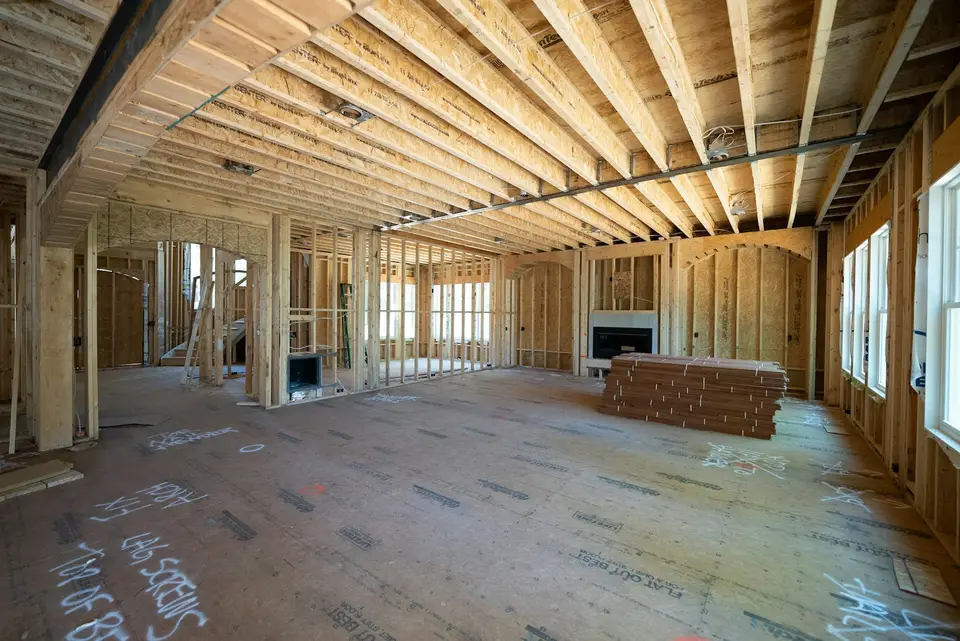
A single-story room addition commonly takes three to five months of construction once the permit is issued, plus several weeks for drawings and permit review. Second-story additions, foundation work, winter concrete and back-ordered windows add time. Your contract lists a start and completion date, and we finish within the agreed schedule.
The biggest schedule risks are design changes after framing, inspections that need to be rebooked, and long-lead items like windows, doors and custom cabinets. We order long-lead items as soon as the contract is signed and give you a weekly update in English or Portuguese.
How the job works, step by step
- Free site visit and scopeWe walk the house, measure, and check framing, foundation, attic and electrical service capacity. We also note pre-1978 painted surfaces and materials that may contain asbestos, because both change how the job is planned.
- Itemized estimate and written contractYou get a line-by-line price, start and completion dates and a dated payment schedule. The deposit never exceeds one-third of the price except for special-order materials, as Massachusetts law (M.G.L. c.142A) requires.
- Drawings, engineering and permitAdditions and structural changes get plans, and beams or footings get sized by a structural engineer when the building official requires it. We file the permit with your local building department so you keep Guaranty Fund protection.
- Protection and demolitionWe seal off the work area with zip walls, protect floors and stairs, set the dumpster and remove only what the plan calls for.
- Framing and rough-insOur crew frames; licensed plumbers and electricians run their rough-ins under their own permits. Framing, plumbing and electrical inspections happen before any wall is closed.
- Insulation, drywall and finishesInsulation to the current energy code (inspected where the town requires it), then drywall, trim, paint and flooring by the same crew, so nothing waits on a new subcontractor.
- Final inspection and walkthroughWe schedule the final inspection, walk the punch list with you, do a post-construction cleaning and collect final payment only when the work is complete.
What it costs in Massachusetts
Typical ranges reported by Angi for the Boston area (2025-2026) and by HomeAdvisor nationally; MetroWest prices usually run a little below Boston. Your final price comes from a free on-site estimate.
| Job | Typical MA range |
|---|---|
| Home addition, Boston-area average | about $68,900 |
| Most Boston-area additions | $27,300 - $112,700 |
| Second-story addition | $400 - $700 per sq ft |
| Building permit for an addition (Boston-area average) | about $570 |
| General contractor fee (national, share of project cost) | 10% - 20% |
Source: Angi: How much do home additions cost in Boston, MA?