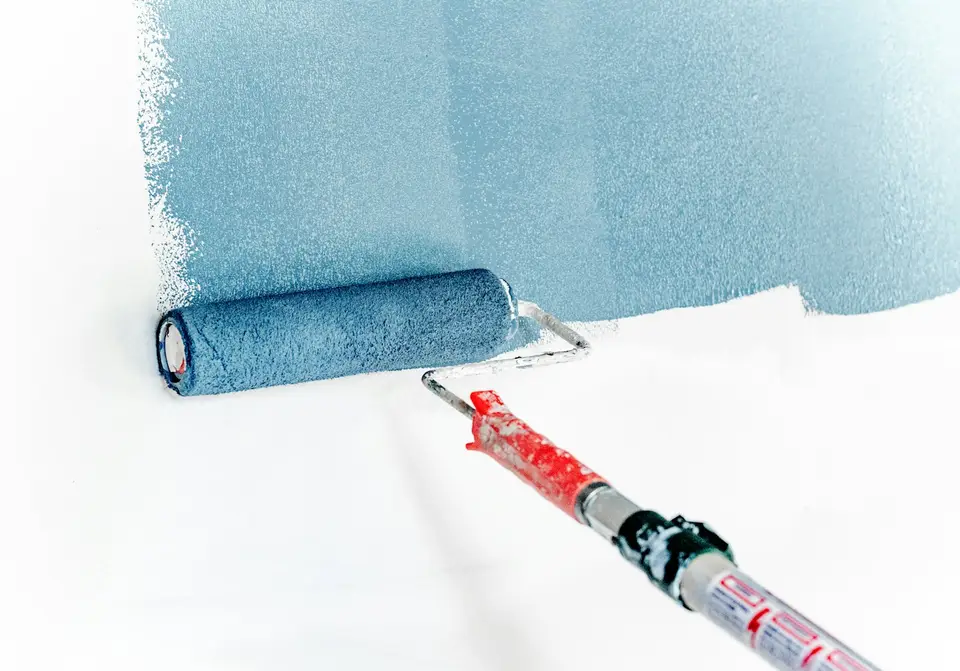
Interior Painting in Shrewsbury: what's different here
Many homes in Shrewsbury mix original plaster rooms with newer drywall additions, so we check every wall for cracks and loose seams before quoting. Whether you are in Shrewsbury Center and Edgemere or near Lake Quinsigamond, the estimate lists each repair, primer and coat in writing.
About 51% of homes were built before 1980 and 11% before 1940; median year built 1979 (ACS 2020-2024 5-year). Homes in Shrewsbury (median year built 1979) often have early drywall with nail pops and original oil-based trim. Pre-1978 houses still fall under Massachusetts lead-safe rules when paint is disturbed.
Shrewsbury's population doubled between 1915 and 1940 as streetcar lines turned it into a single-family suburb of Worcester, and the Shrewsbury Historic District preserves the old town center.
The General Artemas Ward House, home of the Revolutionary War general, is a National Register landmark, and the 1953 Worcester tornado caused extensive damage in town.
Signs you need this service
- Scuffed, faded or patchy walls that no longer clean up
- Nail pops, cracks or old patches showing through the paint
- Water stains on ceilings after a leak or an ice dam
- Peeling paint in bathrooms or over old oil-based trim
- Dated colors before a sale, a move-in or a new baby
- Yellowed trim and doors next to fresh walls
How much does it cost to paint a room in Massachusetts?
In the Boston area, Angi reports an average of about $1,191 to paint a room, with most projects between $433 and $1,733, or roughly $3.50 to $7 per square foot. Ceilings, trim, color changes and drywall or plaster repairs move the price. Your final number comes from a free on-site estimate.
MetroWest prices usually sit at or a little below Boston. The biggest swings come from prep, not paint: a room with smooth walls and the same color needs far less labor than a plaster room with cracks, nail pops and a dark-to-light color change that needs a primer coat.
We price room by room and list what is included: wall repairs, primer, number of coats, ceilings, trim and doors. If water or smoke stains need blocking, or a wall needs drywall repair or plaster repair first, you see it as a separate line, not a surprise.
Why does prep matter more than the paint?
Paint only sticks as well as the surface under it. Dirt, gloss, grease and loose old paint cause peeling, and every dent or crack shows through a fresh coat, especially in satin or semi-gloss. Most of a quality paint job is washing, patching, sanding, spot-priming and caulking before the first finish coat.
On a typical repaint, our crew spends more hours preparing a room than rolling it. Kitchens get degreased. Bathrooms with mildew are cleaned before priming. Old oil-based trim, common in Massachusetts homes, is scuff-sanded and primed with a bonding primer, because latex over glossy oil peels off in sheets.
Lighting matters too. We check walls with a work light held at a low angle, which shows the flaws that afternoon sun will reveal later.
- Wash: kitchens, bathrooms, kids' rooms and hallways
- Repair: nail pops, cracks, dents and loose tape seams
- Sand and spot-prime every patch
- Bond: primer over oil-based trim and glossy surfaces
- Block: stain-blocking primer over water, smoke and marker stains
Which paint sheen should I use in each room?
Use flat or matte on ceilings, since it hides flaws. Matte or eggshell suits living rooms and bedrooms. Satin holds up to scrubbing in kitchens, bathrooms, hallways and kids' rooms. Semi-gloss is the standard for trim, doors and cabinets because it is the hardest and easiest to wipe clean.
Higher sheen means more durability but also more visible imperfections. On older plaster walls with waves and patches, we often recommend a scrubbable matte instead of satin so the walls look smooth. In a bathroom without a strong exhaust fan, satin plus a paint labeled for high humidity is the safer choice.
How many coats of paint does a room need?
Most rooms need two finish coats for even color and full durability. A primer coat comes first on new drywall, large patches, stains, glossy oil-based trim and big color changes. A single coat is only realistic when you keep the same color on a clean, sound wall in good light.
"Paint and primer in one" products help with coverage, but they do not replace a real primer over bare drywall mud, water stains or slick enamel. Skipping that step is the most common reason a repaint looks blotchy within weeks. Our estimates state the number of coats for each surface in writing.
Do I need a lead-safe painter for a house built before 1978?
Yes, when paint will be disturbed. In Massachusetts, paid work that disturbs more than 6 square feet of painted surface per room inside a pre-1978 home must be done by a contractor licensed by the Department of Labor Standards (DLS) for Lead-Safe Renovation, following lead-safe work practices.
Massachusetts runs its own program in place of the federal EPA rule (454 CMR 22.00). Covered work includes scraping, sanding and removing painted trim; window replacement is covered at any size. The contractor must give you EPA's Renovate Right pamphlet before work starts. See the state homeowner guide.
Painting is not deleading. If a child under 6 lives in a pre-1978 home, the Massachusetts Lead Law (105 CMR 460) requires a licensed inspection and deleading by a licensed deleader, which is a separate process. We tell you at the walkthrough which rules apply to your rooms and how the work will be handled.
Do I need a permit to paint the inside of my house in MA?
No. The Massachusetts building code (780 CMR 105.2) exempts painting, papering, tiling and similar finish work from a building permit. You still need a contractor registered as a Home Improvement Contractor for jobs over $1,000 on an owner-occupied home, and lead-safe rules still apply in pre-1978 homes.
For any job over $1,000, Massachusetts law requires a written contract, and the deposit cannot exceed one-third of the price. Our standard terms go further: you pay only when the work is finished and approved.
How the job works, step by step
- Free walkthrough and written estimateWe measure each room, note every crack, stain and loose seam, and check the year built. Pre-1978 homes are flagged for Massachusetts lead-safe rules before anything is scraped or sanded.
- Protect the houseFurniture is moved to the center and covered, floors get drop cloths and rosin paper, and outlets, switch plates and hardware come off. Work areas stay closed off so dust does not travel.
- Repair surfacesWe set nail pops, tape and mud cracks, skim damaged plaster and sand patches flat. Repairs are spot-primed so they do not "flash" through the finish coat.
- Prime what needs itNew drywall gets a drywall primer, water and smoke stains get a stain-blocking primer, and glossy oil trim is scuff-sanded and primed with a bonding primer before latex goes on.
- Caulk and cut inGaps between trim and wall are caulked with paintable caulk. Ceilings, corners and trim lines are cut in by brush before the walls are rolled.
- Two finish coatsWalls and ceilings get two coats at the manufacturer's spread rate, with the recoat time on the label respected. Trim and doors get a durable semi-gloss or satin enamel.
- Walkthrough and cleanupWe walk every room with you under good light, touch up anything you mark, rehang hardware and leave the rooms ready to use. Payment is due only after you approve the work.
What it costs in Massachusetts
These are typical Boston-area ranges reported by Angi; trim figures are national ranges reported by HomeAdvisor. Your final price comes after a free on-site estimate.
| Job | Typical MA range |
|---|---|
| Average room repaint (Boston area) | about $1,191 |
| Most rooms (Boston area) | $433 – $1,733 |
| Per square foot (Boston area) | $3.50 – $7 |
| Baseboard and door/window casing painting (national) | $1 – $4 per linear ft |
| Crown molding painting (national) | $1 – $5 per linear ft |
Source: Angi, cost to paint a room in Boston, MA