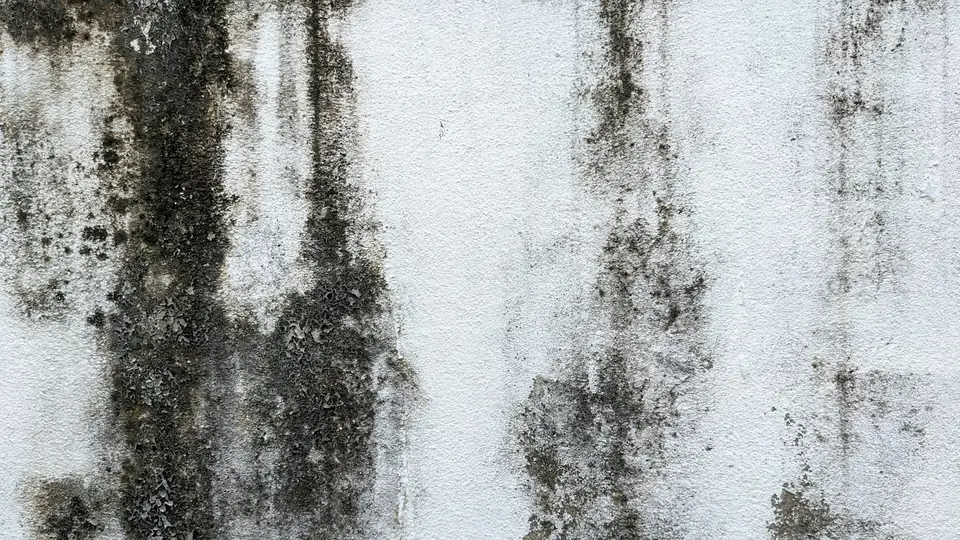
Mold Remediation & Mold Damage Restoration in Southborough: what's different here
Basements in Southborough, especially near Sudbury Reservoir, stay damp through humid summers, and that's where most of our Southborough mold calls start: finished basements with carpet, paneling or drywall right against the foundation. In neighborhoods like Southborough Center and Cordaville, we fix the moisture first, then rebuild with materials that tolerate a basement.
About 49% of homes were built before 1980 and 12% before 1940; median year built 1981 (ACS 2020-2024 5-year). In 1960s to 80s Southborough homes (median year built 1981), we often find mold behind paneling and carpet in basements finished without a vapor barrier, and in attics where bath fans vent into the insulation instead of outdoors.
The 1898 Fayville Dam created reservoirs for Boston's water supply, and about one-tenth of Southborough's area is still flooded by the Sudbury Reservoir.
St. Mark's School (1865) and the Fay School (1866) frame the town center, built largely through the efforts of the Fay, Burnett and Choate families.
Signs you need this service
- A musty smell in the basement, a closet or a crawlspace
- Black, green or white fuzzy spots on drywall, wood or a ceiling
- Bathroom stains or peeling paint that keep coming back
- Dark staining on attic sheathing, often near a bath fan that vents into the attic
- Condensation on windows and cold exterior walls in winter
- Indoor humidity above 50% on a hygrometer
- A past leak that wasn't dried within 48 hours
What should I do in the first 60 minutes after finding mold?
Don't scrub it, spray it or point a fan at it, because disturbing mold spreads spores. Close the room, turn off the HVAC if growth is near a return or duct, stop any active leak, and start a dehumidifier. Photograph the area and call for an assessment if it covers more than about 10 square feet.
- Find the water first: a dripping trap, a wet foundation wall, a bath fan venting into the attic, an ice dam leak.
- Keep children, pets and anyone with asthma or allergies out of the room.
- Don't run the HVAC if you suspect it is contaminated, as EPA warns it can spread mold through the house.
- Don't paint over it or spray bleach on drywall. Bleach doesn't remove growth from porous materials, and never mix bleach with ammonia.
- Take photos and note when you first saw the growth or smelled it; this matters for any insurance question.
Can I remove mold myself, or do I need a professional?
EPA says that if the moldy area is less than about 10 square feet, roughly a 3-by-3-foot patch, you can usually handle it yourself. Above that, after sewage or contaminated water, inside HVAC, or when someone in the house has health concerns, bring in a professional who works under containment.
For a small patch on a hard surface, EPA recommends scrubbing with detergent and water and drying completely. Wear an N95 respirator, gloves and goggles. Moldy drywall, ceiling tile and carpet usually can't be cleaned and should be cut out and replaced.
Bigger jobs are different because removal creates a lot of airborne spores. Without containment and HEPA filtration, you can spread the problem from one basement wall to the whole house.
What do IICRC S520 Conditions 1, 2 and 3 mean?
The IICRC S520 standard describes three conditions. Condition 1 is normal fungal ecology, the background mold every home has. Condition 2 is settled spores that came from a Condition 3 area. Condition 3 is actual mold growth. The goal of remediation is to return every affected area to Condition 1.
The 2024 edition of S520 is explicit that contamination should be removed; encapsulating or painting over growth is not a substitute for cleaning (IICRC S520). Be skeptical of quotes that are mostly "fogging" or "antimicrobial spray" with no removal.
Condition 2 matters in real homes: spores settle on contents and surfaces near the growth. That's why we HEPA-vacuum and damp-wipe surfaces inside the containment, not just the moldy wall.
Should I test my house for mold in Massachusetts?
Usually not. The Massachusetts Department of Public Health does not recommend routine mold testing as part of water-damage cleanup: if you can see or smell mold, the answer is to fix the moisture and remove the moldy materials. Testing makes sense for specific questions, such as suspected hidden growth or a buyer's clearance request.
MA DPH's guidance on mold testing makes the point that results rarely change what needs to be done. Its fact sheet gives the targets that do matter: keep indoor humidity between 30% and 50% and dry damp spots within 48 hours.
Do you need a license to remove mold in Massachusetts?
No. Massachusetts has no state license for mold remediation, so be wary of anyone who claims one. What matters is how the work is done: containment, HEPA filtration, removal of contaminated materials, drying, and verification. We follow IICRC S520 procedures and put the full scope, including the rebuild, in writing before we start.
What Massachusetts does regulate is the work around the mold: a Home Improvement Contractor registration for jobs on owner-occupied homes, lead-safe rules for disturbing paint in pre-1978 homes, and asbestos rules for old materials. Ask any contractor for their HIC number and verify it on the state's Contractor Hub.
Who fixes the walls and moisture problem after mold removal?
We do, with the same crew. Remediation without a rebuild leaves you with open walls, and a rebuild without fixing the moisture brings the mold back. I&D Innovation corrects what's causing the dampness where it is within our trades, then replaces insulation, drywall and paint under one written workmanship guarantee.
Typical fixes include rerouting a bath fan that dumps moist air into the attic, replacing wet attic insulation through our insulation installation crew, adding a vapor barrier in a finished basement, and correcting gutters or grading that send water at the foundation. Then we close the walls with a proper drywall repair, prime, and finish with interior painting.
How the job works, step by step
- Inspection and moisture sourceWe inspect with moisture meters and a thermal camera to find the water feeding the growth. Lab sampling is used only when there's a specific question to answer, in line with MA DPH guidance.
- ContainmentWe isolate the work area with 6-mil poly sheeting and zipper doors, seal HVAC openings, and run HEPA air scrubbers to keep the area under negative pressure.
- Remove contaminated materialsMoldy drywall, insulation, carpet and other porous materials are cut out, bagged inside containment and carried out sealed.
- Clean structural surfacesFraming and sheathing are HEPA-vacuumed, sanded or wire-brushed and damp-wiped until growth is physically gone. Per IICRC S520, contamination is removed, not just sprayed or painted over.
- Dry and verifyDehumidifiers bring materials and air back to normal moisture levels. We verify visually and with moisture readings, and arrange third-party clearance testing when you ask for it.
- Fix the cause and rebuildWe correct what we can (bath fan venting, wet insulation, missing vapor barrier), then install new insulation and drywall, prime and paint, under one written guarantee.
What it costs in Massachusetts
Typical ranges reported by Angi for the Boston area (2026) and by This Old House nationally. Rebuild rows use Angi's Boston drywall and painting data. Price depends mostly on the affected area and access; your number comes from a free on-site estimate.
| Job | Typical MA range |
|---|---|
| Mold remediation, Boston area | $5 – $25 / sq ft |
| Mold remediation, national typical range (This Old House) | $10 – $25 / sq ft |
| Mold inspection or assessment, only when needed | $300 – $1,075 |
| Drywall replacement after removal, about a 10 sq ft section | $545 – $815 |
| Repainting the room with stain-blocking primer | $433 – $1,733 |
Source: Angi — Boston mold remediation cost