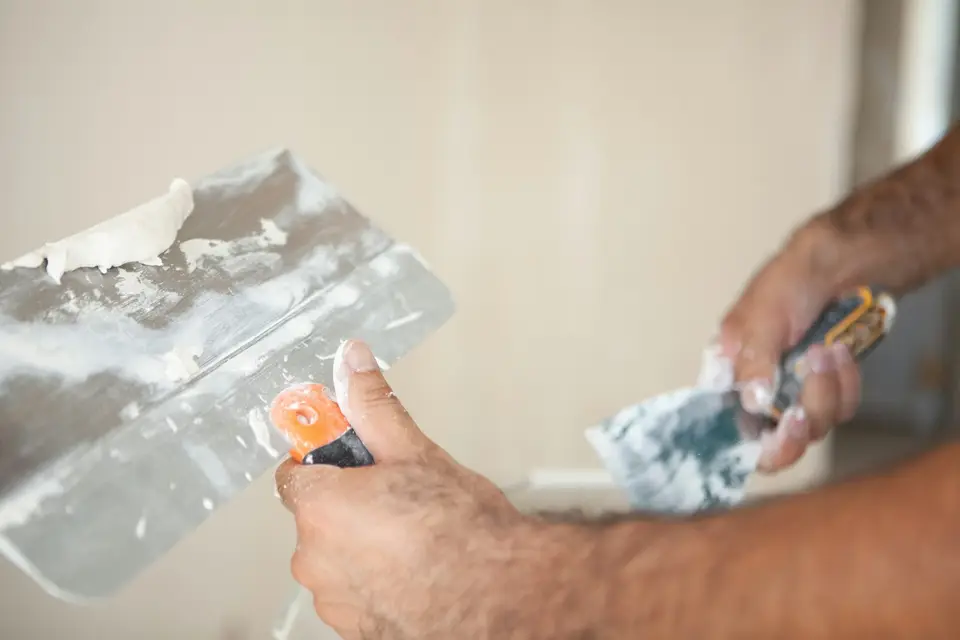
Drywall & Plaster Repair / Plastering in Natick: what's different here
Older neighborhoods in Natick, including Natick Center and South Natick, still have plenty of plaster-and-lath homes, and ice dams in Middlesex County winters send water straight into top-floor ceilings. We reattach and repair plaster rather than gutting it whenever the plaster is sound, which keeps dust, cost and lead risk down.
About 61% of homes were built before 1980 and 22% before 1940; median year built 1968 (ACS 2020-2024 5-year). Homes in Natick from around 1968 may have veneer plaster over blueboard or early drywall. We repair veneer plaster with veneer products and a bonding agent so the patch is as hard as the wall around it.
Much of Natick's housing comes from late-1940s and 1950s tract neighborhoods, such as Sherwood's 1948 colonials, Wethersfield's slab-built Campanelli ranches and the Cape-style streets off South Oak Street.
Walnut Hill north of downtown is known for Victorian-era houses along Walnut, Highland and Bacon Streets, and South Natick on the Charles River has some of the town's oldest homes.
Signs you need this service
- Spiderweb or long diagonal cracks in plaster walls or ceilings
- A ceiling that bulges, sounds hollow or moves when pushed gently
- Plaster crumbling or falling around old fixtures and outlets
- Water stains or soft plaster after an ice dam or roof leak
- Hairline cracks that reopen every winter
- Old patches that look flat or different from the rest of the wall
- A remodel that leaves new drywall meeting old plaster
Should I repair or replace plaster walls in an old house?
Repair them when most of the plaster is still firmly attached to the lath. Sound plaster is harder, quieter and more fire-resistant than standard drywall, and repair costs less than demolition. Replace sections when large areas have lost their grip on the lath, have been soaked repeatedly, or are crumbling, then patch in drywall or veneer plaster to match.
The National Park Service’s Preservation Brief 21 recommends repairing historic flat plaster where possible, noting that three-coat plaster is durable, resists fire and reduces sound transmission. Tearing out plaster also creates heavy dust and can disturb lead paint and other hazardous materials.
Our rule of thumb: if you can press on the wall and nothing moves, it is a repair. If a ceiling is bowing, sounds hollow over a wide area, or has been through an ice dam leak more than once, we price both options so you can compare.
How do you fix a sagging or cracked plaster ceiling?
A sagging plaster ceiling has lost its keys, the plaster that grips the lath. It is fixed by gently pushing the plaster back up, securing it with screws and plaster washers into the joists or lath, and often injecting adhesive behind it. Once it is tight, the cracks are taped, filled and skim-coated so the washers disappear.
A bulging ceiling can fall without warning, so we shore it up first and work from the edges toward the worst area. If the plaster is too broken to reattach, we cut out the bad section and fill it with drywall shimmed to the plaster’s thickness, then skim the whole area so it reads as one ceiling.
Simply painting or caulking ceiling cracks hides the symptom. If the plaster is moving, the crack comes back, usually in the first cold snap.
What is veneer plaster, and do I have it?
Veneer plaster is a thin, hard coat of plaster, about 1/16 to 1/8 inch thick, troweled over special gypsum base panels often called blueboard. It has been widely used in New England homes since the mid-20th century. If your walls look like drywall but feel harder, with no visible seams or screw pops, you probably have veneer plaster.
Veneer plaster is repaired with veneer plaster products and a bonding agent, not just drywall mud, so the patch has the same hardness and does not flash under paint. It is also a strong option for new rooms in older houses because it gives a plaster-like finish in far less time than traditional three-coat work.
Older homes often have a third system: plaster over gypsum rock lath, small boards common from about the 1930s to the 1950s. It looks like plaster from the room but behaves differently when you cut it, which matters when an electrician or our drywall repair crew opens a wall.
Is it safe to remove or sand old plaster?
Not without precautions. Plaster in pre-1978 homes is often covered with lead paint, and some old plaster, textures and patching compounds contained asbestos. In Massachusetts, renovators disturbing more than 6 sq ft of painted surface per room in pre-1978 housing must follow lead-safe rules, and MassDEP requires an asbestos survey before renovation or demolition.
Massachusetts runs its own lead-safe renovation program through the Department of Labor Standards (mass.gov). We use lead-safe work practices: containment, misting, HEPA vacuums and careful cleanup. If an asbestos sample comes back positive, a DLS-licensed abatement contractor removes it before we start; we do not do asbestos abatement.
This is one more reason repair is often smarter than demolition: reattaching and skim coating plaster disturbs far less material than tearing it out down to the studs.
Can you cover old plaster with drywall instead of tearing it out?
Yes. If the plaster is uneven but mostly attached, we can laminate 1/4-inch or 3/8-inch drywall over it, screwed through into the framing, and finish the new surface. This avoids most of the dust and hazardous-material disturbance of a full demo, but it adds thickness, so window and door trim and outlets need adjusting.
Overlaying works best on walls with many cracks and patches but no major sagging. On a badly bowed ceiling we usually reattach or remove first. We give you a side-by-side price for repair, overlay and replacement, and our interior painting crew can finish the room once the surface is ready.
How the job works, step by step
- Identify the systemWe confirm what you have: three-coat plaster on wood lath, plaster on gypsum rock lath, or veneer plaster on blueboard, because each is repaired differently.
- Test before we disturbIn pre-1978 homes we plan for lead paint, and we recommend an asbestos survey by a licensed inspector before demolishing or sanding old plaster and textures.
- Contain the dustPlastic walls, covered floors and HEPA vacuums keep plaster dust, which is fine and heavy, inside the work area.
- Reattach loose plasterDelaminated plaster is pinned back to the lath with screws and plaster washers, with adhesive injected behind it where needed, before any crack is filled.
- Fill, tape and rebuildCracks are opened and taped with mesh in setting compound; holes are filled with base-coat plaster or a shimmed drywall patch to the same depth.
- Skim and finishA skim coat or veneer finish coat brings the repair flush with the old surface, then we prime with a bonding primer for paint.
What it costs in Massachusetts
These are national typical ranges reported by HomeGuide (2026); plaster work in older Massachusetts homes often lands in the upper half because of lead-safe prep and access. Your price is set after a free on-site estimate.
| Job | Typical MA range |
|---|---|
| Patch small to medium holes or cracks in plaster | $200–$500 |
| Ceiling crack repair | $150–$400 |
| Lath-and-plaster ceiling repair, per sq ft of damaged area | $50–$125/sq ft |
| Replastering or skim coating a wall surface | $5–$15/sq ft |
| Typical minimum charge for a small ceiling repair | $125–$200 |
Source: HomeGuide — Ceiling and plaster repair cost