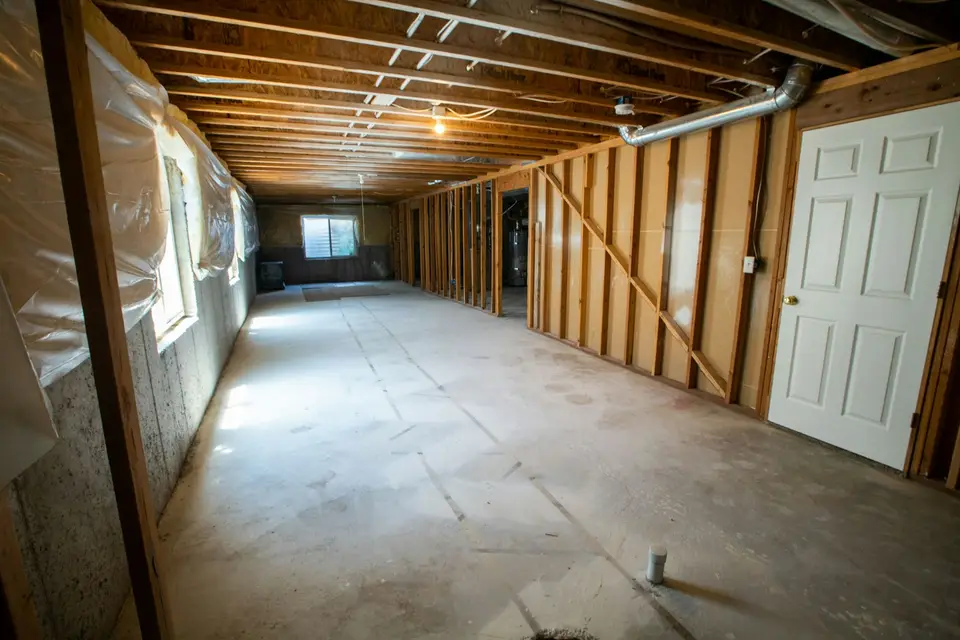
Sewage Damage Cleanup & Restoration in Marlborough: what's different here
Many Marlborough streets have older sewer laterals, and clay or cast-iron pipe with tree roots is a common cause of the basement backups we see. Heavy spring rain can also overload sewers in low areas near Assabet River. In neighborhoods like Downtown Village and French Hill, we disinfect and dry to measured goals before rebuilding, and recommend asking a licensed plumber about a backwater valve.
About 57% of homes were built before 1980 and 21% before 1940; median year built 1974 (ACS 2020-2024 5-year). In Marlborough homes from the 1960s to 80s (median year built 1974), we often see finished basements with carpet, paneling and drywall that soak up sewage, and 9-by-9 floor tile and mastic that may contain asbestos and must be tested before removal.
By 1890 Marlborough was a major shoe-manufacturing center, and multi-unit worker housing blocks built by shoe manufacturers still stand near former factory sites such as Devens and Elm Streets.
The bell from John Brown's fort at Harpers Ferry, brought home by a Marlborough Civil War company, hangs in a tower at Route 85 and Main Street.
Signs you need this service
- Dirty water coming up through a basement floor drain, toilet or shower
- Toilets or drains gurgling when the washing machine empties
- A sewage smell in the basement or around floor drains
- Several fixtures draining slowly at the same time
- Backups during heavy rain, when town sewers are overloaded
- A septic alarm, or wet, smelly ground over the leach field
What should I do in the first 60 minutes after a sewage backup?
Stop running water anywhere in the house, because every flush and load of laundry feeds the backup. Keep children and pets away, don't touch sewage without gloves and boots, cut power to the basement only from a dry location, and photograph everything. Then call a cleanup crew and a licensed plumber.
Sewage carries bacteria, viruses and parasites, and it soaks into anything porous within hours. Under the IICRC S500 standard it is Category 3, grossly contaminated water, and EPA recommends calling a professional when damage is caused by sewage or other contaminated water.
- Don't flush, shower, run the dishwasher or do laundry until the line is cleared.
- Turn off the HVAC so it doesn't pull odor and contaminated air through the house.
- Keep everyone out of the affected area, especially children, pets, older adults and anyone with a weakened immune system.
- Photograph the water level, the drain it came from and the damaged items before anything is moved.
- If you think the town's sewer main is blocked, call your DPW or sewer department right away and write down who you spoke with.
- Call or text (774) 285-1518; we coordinate the cleanup and the licensed plumber.
Is it safe to clean up sewage myself?
Not beyond a small, contained toilet overflow on a hard floor. Sewage is Category 3 water carrying bacteria, viruses and parasites, and it soaks into drywall, carpet and wood. Proper cleanup requires protective gear, containment, removal of porous materials, cleaning followed by disinfection, and drying confirmed with a moisture meter.
The common DIY mistakes are spraying bleach over carpet and drywall, running fans that blow contaminated particles around, and closing walls before the framing is dry. Each one leaves contamination or moisture behind, and usually mold a few weeks later; see our mold remediation page for what that costs.
What has to be thrown away after a sewage backup?
Porous materials that sewage touched generally can't be made safe and are thrown away: carpet and pad, upholstered furniture, mattresses, drywall and insulation below the wet line, particleboard, cardboard boxes, stuffed toys and food. Hard, non-porous items such as metal, glass, sealed tile and solid wood furniture can usually be cleaned and disinfected.
- Discard: carpet and pad, area rugs, upholstered furniture, mattresses, box springs, pillows
- Discard: drywall, insulation and particleboard the water reached, with a margin above the wet line
- Discard: paper, cardboard, books, stuffed toys and any food or medicine that got wet
- Usually saved: metal, glass, ceramic, sealed tile, concrete, solid wood framing (cleaned, disinfected and dried)
- Ask first: clothing and fabrics can sometimes be professionally laundered; photograph them before deciding
Does insurance cover sewer backup in Massachusetts?
Not under a standard policy. The Massachusetts Division of Insurance says standard homeowners, condo and renters policies exclude sewer backup and sump pump failure, but most insurers sell an endorsement, and some endorsements still exclude backup caused by flood. Water seeping through foundation walls or floors isn't covered, and no endorsement exists for it.
Check your declarations page for a "water backup" or "sewer and drain" endorsement and its limit, which is often lower than the cost of a full basement rebuild. Federal flood insurance covers sewer backup only when a general flood in the area is the direct cause (MA Division of Insurance). Your insurer decides coverage; we don't negotiate claims or waive deductibles.
What we document: photos of the water line and source, a list of removed materials and why, moisture logs, disposal records, and an itemized estimate for cleanup and rebuild. Keep the plumber's invoice too, since it shows the cause of the backup.
Who is responsible for a sewer backup, me or the town?
It depends on where the blockage is. In many Massachusetts towns the homeowner is responsible for the building sewer, the pipe from the house to the connection at the main (sometimes only to the property line), and the town for the main itself. Rules vary, so call your DPW or sewer department as soon as it happens.
A licensed plumber with a camera can usually show where the blockage was: roots in your clay lateral, grease in your line, or a backed-up main in the street. If the town's main was the cause, ask the DPW in writing how to file a claim, since municipal claims have written notice deadlines. Our documentation helps either way.
Why use one crew for sewage cleanup and the basement rebuild?
Because the rebuild should be planned while the walls are open. I&D Innovation removes and disinfects, dries to measured goals, and then rebuilds the basement with materials that tolerate water, with one crew, one schedule and one written workmanship guarantee. Licensed plumbing partners handle the line and any backwater valve.
After a backup we usually recommend a flood cut at 2 or 4 feet so the wall can be patched cleanly, moisture-resistant drywall at the bottom, and a floor that survives water. Waterproof vinyl plank flooring (LVP) is a common choice for basements. If the basement needs a bigger rethink, our home remodeling crew can turn the repair into the finished basement you wanted anyway.
How the job works, step by step
- Stop the sourceWe tell you to stop using water in the house, and our licensed plumbing partner clears or repairs the line. In Massachusetts, plumbing work is done only by a licensed plumber.
- Protect people and contain the areaThe crew works in protective suits, gloves, boots and respirators. We set up containment so contaminated air and debris don't reach clean rooms, and seal off HVAC returns.
- Extract and removeWe pump and extract the sewage, then remove porous materials the water touched: carpet and pad, drywall cut above the wet line, insulation and particleboard. Debris is bagged and hauled away.
- Clean and disinfectHard surfaces, framing and the slab are cleaned with detergent, rinsed, and treated with an EPA-registered disinfectant. Cleaning comes before disinfecting, because disinfectant can't work through dirt.
- Dry to measured goalsDehumidifiers and air movers dry framing and concrete under IICRC S500 procedures, with daily moisture readings logged until every material reaches its drying goal.
- RebuildThe same crew installs new insulation and drywall, paints, and puts down flooring that tolerates a basement, under one written workmanship guarantee.
What it costs in Massachusetts
National typical ranges reported by HomeGuide for sewage cleanup; rebuild rows are Boston-area figures from Angi (drywall, painting) and a local cost aggregator (LVP). Category 3 work costs more per square foot than clean-water drying. Final price after a free on-site estimate.
| Job | Typical MA range |
|---|---|
| Sewage cleanup, typical total (national) | $2,000 – $15,000+ |
| Sewage cleanup per square foot (national) | $7 – $15+ / sq ft |
| Drywall repair, about a 10 sq ft section (Boston) | $545 – $815 |
| LVP flooring, installed (Boston area) | $6 – $12 / sq ft |
| Repainting one room (Boston) | $433 – $1,733 |
Source: HomeGuide — Sewage cleanup cost