Storm & Ice Dam Damage Restoration in Framingham: what's different here
Ice dams form on Framingham roofs whenever deep snow is followed by a cold snap, and nor'easter rain drives water through older siding and windows. Our Framingham storm calls range from ceiling leaks in neighborhoods like Saxonville and Nobscot to tree damage near Sudbury River. We tarp and board up first, then dry the house and rebuild the inside.
About 73% of homes were built before 1980 and 17% before 1940; median year built 1966 (ACS 2020-2024 5-year). Framingham homes from the 1960s to 80s (median year built 1966), such as capes, splits and raised ranches, often have recessed lights and bath fans leaking heat into thin attic insulation, which feeds ice dams. Drywall from that era is easy to patch, but popcorn ceilings may need asbestos testing first.
The Framingham Centre Common Historic District, anchored by Framingham State University, is the city's historic center, while Saxonville retains the former Roxbury Carpet Company mill complex once powered by the Sudbury River.
Most of Framingham's multi-family housing is concentrated in the apartment and condominium complexes lining Route 9 on the West Side, and South Framingham grew as the commercial and industrial center after the railroad arrived.
Signs you need this service
- Water dripping from a ceiling, window head or exterior wall during a thaw
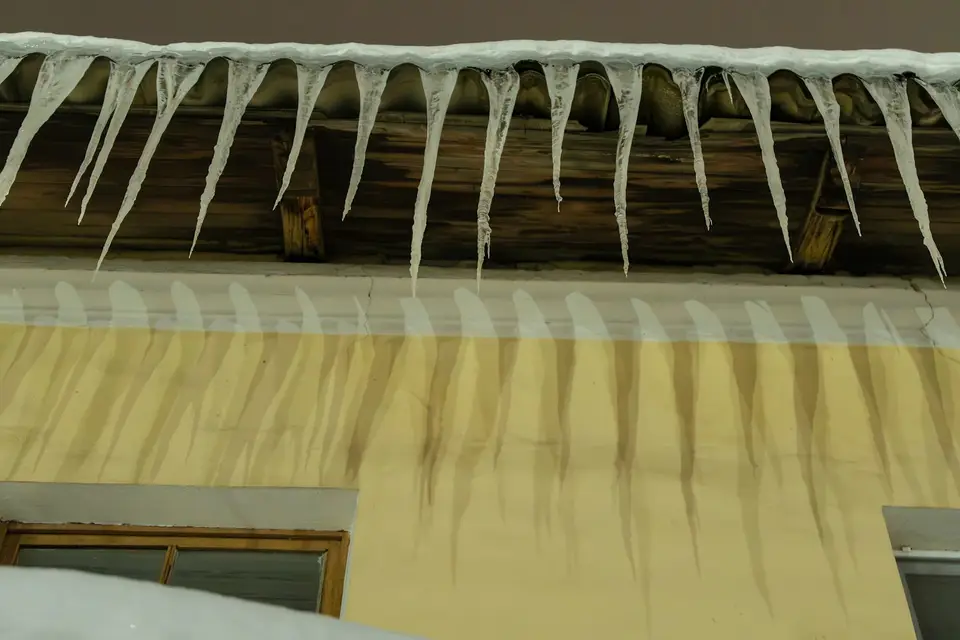
- A thick ridge of ice along the eaves and icicles hanging from the gutters
- Brown stains or sagging drywall where exterior walls meet the ceiling
- Wet attic insulation or frost on the underside of the roof sheathing
- Missing shingles, broken windows or a tree limb through the roof after a storm
- Peeling paint or bubbling plaster below the roofline in spring
- Rotted fascia, soffit or trim along the eaves
What should I do in the first 60 minutes when an ice dam is leaking?
Catch the water and protect what's below it: set out buckets, move furniture and turn off lights and fans in the wet area. If a ceiling is bulging with water, stand clear and puncture it at the lowest point into a bucket to relieve the weight. Photograph everything, then call for interior dry-out.
- Don't climb onto an icy roof or set a ladder on ice. Rake snow from the first few feet of the roof only from the ground, with a roof rake.
- Never chip ice with a hammer, axe or shovel; it tears shingles and gutters. Ice removal is a job for a roofing or ice-dam specialist who uses low-pressure steam.
- Turn off the breaker for any light fixture or fan with water dripping from it.
- Photograph the ice along the eaves from outside and the stains inside, with dates; your insurer will want both.
- After a storm, stay away from downed wires, call the utility, and don't go under a damaged section of roof.
- Call or text (774) 285-1518 for emergency tarping, board-up and water extraction.
What causes ice dams in Massachusetts homes?
Heat escaping from the living space warms the roof deck and melts the snow, and the meltwater refreezes at the cold eaves. That ridge of ice traps more water, which backs up under the shingles and into walls and ceilings. Air leaks from bath fans, top plates, recessed lights and chimneys are usually the main driver.
UMass Building and Construction Technology recommends fixing the cause in order: air sealing first, then insulation, with ventilation as a secondary measure. Heat cables and roof raking treat the symptom. Many older Massachusetts homes have far less attic insulation than today's code calls for, and plenty of air leaks into the attic.
Winter 2026 showed how fast this adds up: in February, Boston-area news outlets reported a surge in ice dam calls that overwhelmed removal contractors. When we repair the inside, our insulation installation crew can air seal and insulate the attic while it is already open. Mass Save offers no-cost home energy assessments and large insulation rebates through participating contractors, and it is worth checking before you insulate.
Is ice dam damage covered by insurance in Massachusetts?
The interior damage often is. The Massachusetts Division of Insurance says ice dam damage may be covered if it is sudden and not caused by lack of maintenance, and that policies generally pay to repair only the damaged area. Whether removing the ice itself is covered varies by policy, so ask before you hire. Your insurer decides.
Winter water is the biggest homeowners claim category in the state: the Division reports that 48.6% of 2024 Massachusetts homeowners claims were non-flood water and freezing losses (MA Division of Insurance, January 2026). After the record winter of 2015, the Division also rejected an insurer's proposed special ice-dam deductible of up to $10,000, so ice dam losses fall under your regular deductible unless your policy says otherwise.
We document the loss so your insurer can review it quickly. We don't negotiate claims or waive deductibles; coverage decisions are your insurer's.
- Dated photos of the ice dam from outside and of every interior stain
- Moisture map showing how far water traveled inside walls and ceilings
- Receipts for tarping, ice removal, hotels or anything you paid for to stop further damage
- List of removed materials (insulation, drywall, trim) with the reason for each
- Itemized estimate for drying and repairs, separated from any upgrade you choose to add
How do you protect a house right after a nor'easter or a fallen tree?
With emergency tarping and board-up. We cover roof openings with reinforced tarps fastened to battens, board broken windows and doors with plywood, and extract any water that got in. That stops further damage, which most policies require you to do, and buys time for permanent roof and window repairs.
Winter storms are Massachusetts's most expensive weather events: 15 of the 45 billion-dollar weather disasters that hit the state from 1980 to 2024 were winter storms, including the March 2018 nor'easters (NOAA NCEI). Nor'easters drive rain sideways through siding, windows and chimney flashing, not just through the roof.
A tree on the house is removed by a tree service or arborist, and permanent roof replacement is done by a roofing contractor under a building permit. We handle the tarping, the board-up, the interior dry-out, and every repair inside the house, plus rotted fascia, soffit and trim on the outside.
Who repairs ceilings, plaster and paint after ice dam damage?
We do, with the same crew that dried the house. Ice dam leaks usually ruin ceiling drywall or plaster, insulation, paint and sometimes trim and floors along exterior walls. I&D Innovation dries the structure, replaces insulation, repairs drywall or plaster, and repaints to match, under one written workmanship guarantee.
Older MetroWest houses often have plaster ceilings. When plaster is still keyed to the lath, we dry it in place and repair it with our plaster repair crew instead of tearing out whole ceilings. Then the room is primed with a stain-blocking primer, because water stains bleed through ordinary paint, and finished by our interior painting crew.
How the job works, step by step
- Emergency tarping and board-upWe cover roof openings with heavy tarps fastened to wood battens, board up broken windows and doors with plywood, and stop more water from getting in.
- Interior water controlWe protect furniture and floors, safely drain water trapped above ceilings, and start extracting water from carpets and floors.
- Moisture mapping, attic to basementA thermal camera and moisture meters show where meltwater traveled inside walls and ceilings, which is often well beyond the visible stain.
- Remove what can't be driedSoaked blown-in insulation, sagging ceiling drywall and swollen trim come out. Plaster that is still keyed to the lath is dried and kept whenever possible.
- Structural dryingAir movers and dehumidifiers dry the framing, sheathing and plaster under IICRC S500 procedures, with readings logged daily until drying goals are met.
- Repair and reduce the riskWe replace insulation, repair drywall and plaster, repaint, fix rotted exterior trim, and recommend air sealing and insulation upgrades so the next ice dam is less likely.
What it costs in Massachusetts
Typical ranges reported by Angi (2026): national figures for roof tarping and ice dam steaming, Boston-area figures for water mitigation, drywall repair and attic insulation. Emergency or after-hours tarping can cost more. Your price comes from a free on-site estimate.
| Job | Typical MA range |
|---|---|
| Emergency roof tarp (national average about $450) | $150 – $3,300 |
| Ice dam steam removal by a roofing or ice dam specialist (national) | $300 – $600 / hour |
| Interior water damage mitigation, most Boston-area jobs | $1,584 – $4,713 |
| Drywall repair, about a 10 sq ft ceiling or wall section (Boston) | $545 – $815 |
| Attic insulation (Boston) | $1 – $4 / sq ft |
Source: Angi — Cost to tarp a roof
Standards & references
- MA Division of Insurance — Frozen pipes, ice dams and 2024 claims
- MA Division of Insurance — Homeowners insurance FAQ (ice and snow damage)
- UMass Building & Construction Technology — Preventing ice dams
- NOAA NCEI — Billion-dollar disasters, Massachusetts summary
- MA Attorney General — Hiring rooftop snow and ice removal contractors